Mustafa Suleyman's Two-Part Promise Does Not Hold Together
Superintelligence is near. Also, it will not take your job. Pick one.
A company hiring ten people to test an AI-guided masturbation feature is not running a study. It is running a marketing campaign, and the trade press is the unpaid distribution layer.
Superintelligence is near. Also, it will not take your job. Pick one.
Siri AI, a Photos refresh, Shortcuts with prompts. The headline feature at WWDC 2026 is buried in a developer footnote about who pays for the inference.
Everyone is scoring WWDC on who shipped voice AI first. The more interesting question is who can ship one that still works the same way in three years.
Seventy-three poisoned Microsoft packages and a self-replicating stealer that fires the moment an AI agent opens them. The threat model just shifted, and most companies have not noticed.
A leaked internal memo reportedly frames engagement as Microsoft's north star for its AI assistant. The interesting question is not whether that is cynical. It is what it tells you about the economics of the product.
UC Berkeley computer science professors are watching grades collapse alongside math skills. The interesting question is not whether students used AI. It is what they stopped learning while they did.
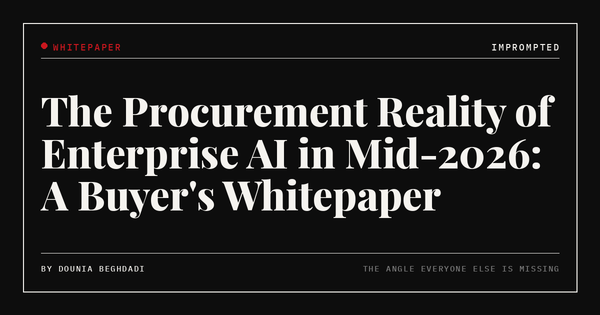
A sober assessment of what AI procurement actually looks like this quarter, from memory price shocks and usage caps to chatbot account-takeovers and small-model substitution. Built for teams writing next year's budget, not next week's press release.
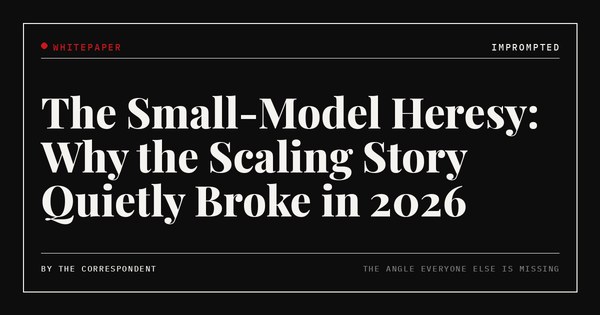
Read the ReportThe dominant AI narrative still runs on parameter counts and trillion-dollar valuations. The data underneath is telling a different story. A look at what specialised agents, MIT's GPT-5-mini result, and Qwen's deployment footprint mean for the buyers footing the bill.
Read the Report